2026 EDITION — BY KLAUDIUS BREITKOPF
The Executive Health
Operating System
Strategic health management for executives.
How to systematically scale your energy, focus, and stress resilience.

THE PROBLEM
No Resolutions. An Operating System.
You would never run your company without KPIs, without processes, and without data. Yet when it comes to your most important asset — your body — you rely on chance and willpower.
Hope Instead of Strategy
Good intentions without a system fail against reality.
Stress Beats the Plan
Under pressure, everyone falls back on old patterns.
Without Data, You Guess
Without metrics, all measures are left to chance.
Systems > Motivation
Motivation is volatile. Systems always work.
High energy, good systems, clear structures.
Fatigue, performance plateaus, declining focus.
Sleep problems, exhaustion, chronic pain.
THE SYSTEM
The 4 Pillars of Your
Health Operating System
PILLAR 1
Mindset:
The CEO of Your Body
In every company, high-performance machines are maintained regularly. Nobody would allow 24/7 operation without servicing. Yet when it comes to the most important performance factor — your body — maintenance is often neglected.
Health is not the absence of illness. It is the foundation of high performance.

High ATP capacity = high mental and physical performance.
Chronically elevated cortisol levels and inflammation markers increase energy costs.
Deep sleep regulates hormones, reduces inflammation, and repairs neural systems.
High stress fixed costs + low recovery = wear, exhaustion, performance decline.
High energy production + robust recovery = focus, resilience, peak performance.
PILLAR 2
Posture:
Leadership Starts in the Body
How you stand, sit, and breathe determines how clearly you think, how confidently you come across, and how resilient your nervous system operates. 8–14 hours in collapsed posture is interpreted by your brain as chronic stress.
Posture is applied neuroeconomics.
Every 45–60 minutes: stand up, 3 deep breaths, 10 seconds of shoulder circles. 30 seconds of activation increases cerebral blood flow.
If your upper body tilts more than 20° forward, your nervous system interprets it as a stress posture. Lift the sternum, gaze at eye level.
4 contact points (feet + sit bones). 2 lines (ear → shoulder → hip). 4 deep breaths. Immediate reduction of sympathetic tension.
The 90-Second Stress Reset
Inhale for 4 seconds. Exhale for 8 seconds. 6 repetitions. Proven to activate the vagus nerve, lower heart rate, and reduce cortisol.
PILLAR 3
Nutrition:
Business Dining Strategy
Top executives understand: food is a performance tool. Not comfort, not distraction. It is strategic fuel.

Protein First
Start every meal with protein. Protein slows glucose absorption, stabilizes blood sugar — no more 2 PM fatigue.
The Water Mandate
0.03–0.04 liters × body weight per day. Systematic hydration instead of spontaneous water intake. +10–20% cognitive performance.
The 80% Rule
Hara Hachi Bu: Eat until comfortably satisfied, not full. Less digestive stress, more energy, more stable blood sugar.
The Plate Strategy
Fiber stabilizes blood sugar
Keeps you full, prevents cravings
Satisfaction without overload
The Cost of the Nightcap
Alcohol sedates but doesn't regenerate. Your body interprets alcohol as a stressor: deep sleep is reduced, REM sleep drops by up to 40%. You sleep — but your brain doesn't recover.
A nightcap doesn't relax — it burdens. Your body works harder at night instead of recovering.
Last sip at least 2 hours before bed. Your body needs time to metabolize.
Slows absorption. Maximum 1 drink per hour. Less cardiovascular strain.
500 ml of water before bed. 300 ml with electrolytes in the morning. Significantly less hangover.
PILLAR 4
Energy Management:
Sleep Is Work
Imagine you have an employee who cleans up your brain every night, reduces inflammation, and recalibrates your stress systems. That employee's name is: Sleep.

16–18 °C Room Temperature
Core body temperature must drop for deep sleep. A bedroom that is too warm is one of the strongest sleep killers.
Total Darkness
Even small light sources reduce melatonin production. Use blackout curtains or a sleep mask.
Digital Sunset
No blue light 60 minutes before bed. Otherwise your body thinks it is midday.
The MED Weekly Plan: Minimum Effective Dose
25–35 min. Major movement patterns: squats, deadlifts, pressing, pulling.
20–40 min. Improves cardiovascular and mitochondrial capacity.
Short, targeted impulses. Frequency beats duration.
7–9 hours. Track deep sleep & REM as primary KPIs.
Protein first, no coffee after 2 PM. Consistency beats complexity.
CASE STUDY
When You Manage Your Health
Like Your KPIs
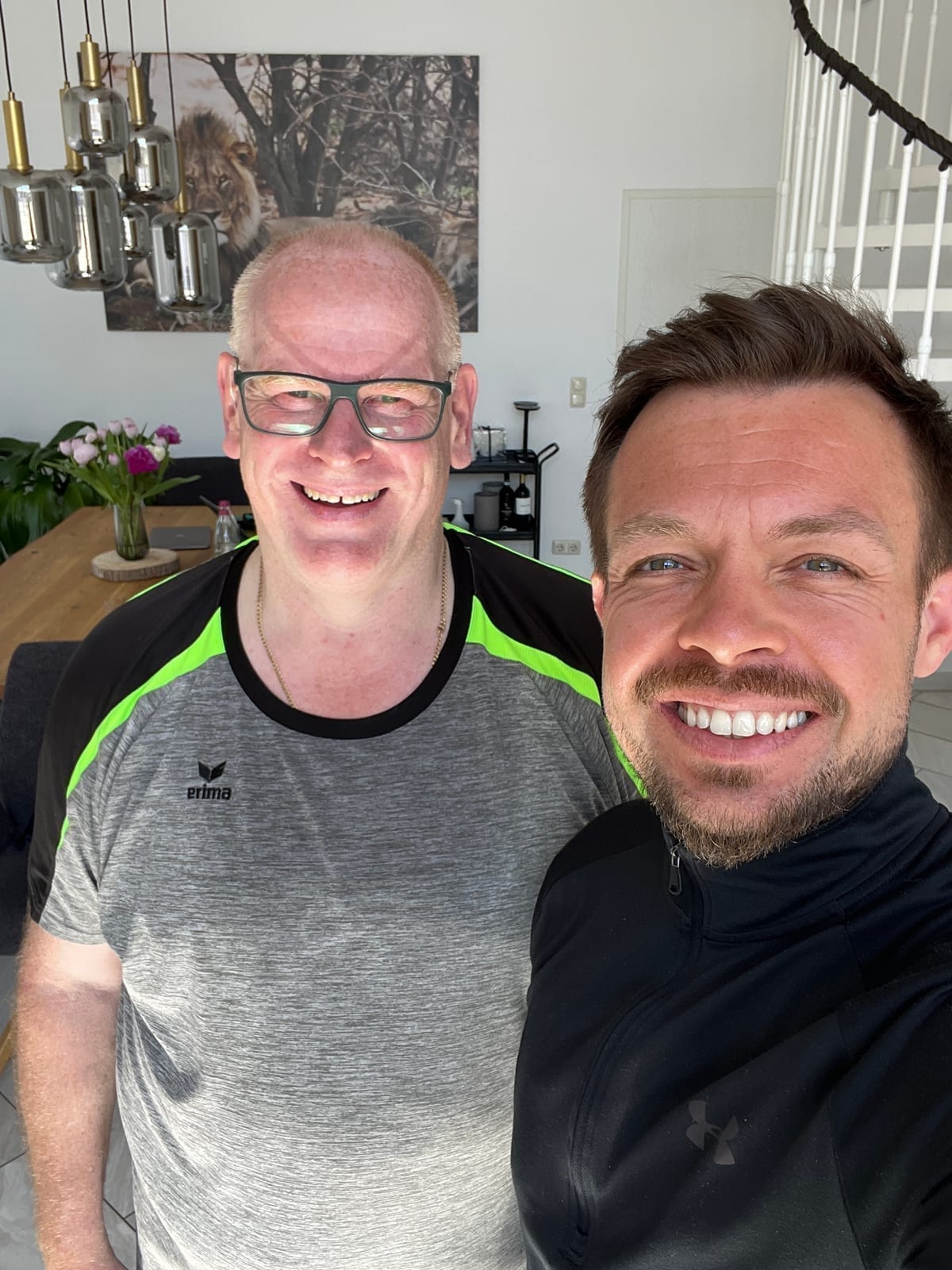
Werner, Age 52
CEO · 240 Employees · 60–80h Weeks
I never thought so little time could change so much.
Starting Point
- 127.5 kg body weight
- 4–6 hours of sleep, frequently interrupted
- Back and joint pain
- Massive afternoon energy crashes
After 6 Months
- 100.2 kg — nearly 30 kilos lighter
- 7+ hours of deep, restorative sleep
- Pain significantly reduced
- Clearer, more focused, higher performing
Results were not achieved through deprivation or dieting — but through clarity, structure, data, and a system that works.
YOUR NEXT STEP
Energy doesn't follow resolutions.
It follows systems.
The question isn't when you start. The question is: How good are your systems today?
Choose One Pillar
Focus for 7 days on just one implementation: 10-min walk, water formula, sleep checklist, or posture correction.
Eliminate One Energy Leak
Coffee after 2 PM, nightcap, late-night meal, or 6 hours of sleep — cut one saboteur.
Build a System
Simple, clear structures beat motivation. Every time. Let us build your system together.

Personal. Science-based. Free.